
Tourism and Culture
- Home
- Tourism and Culture

Experience Nigeria
About nigeria Tourism
Diverse Land and People
Tourism is also one of the growing sectors of the Nigerian economy. The industry
was accorded priority status in 1990 when the National Tourism Policy was
launched. The main thrust of Government policy on tourism was to generate foreign
exchange earnings, create employment opportunities, and promote rural enterprises
and national integration among other things.
Experience Rich Diversity
Tourists visiting the country will gain insights into a glorious past and a promising
future, set amid the natural beauty of this diverse country. From rain forests in the
south, and broad savanna woodlands in the center, to a semi-desert region in the
north, Nigeria offers a remarkable range of physical beauty in her land and the
hospitality of her people, ready to be enjoyed by the tourists fortunate enough to
choose this land of ancient empires as their travel destination
The richness and diversity of the Nigerian culture is a manifestation of the
socio-cultural differences of the over 250 ethnic groups that have inhabited the land
for ages.
Nigeria offers a wide variety of tourist attractions such as extended and roomy river
and ocean beaches ideal for swimming and other water sports, unique wildlife, vast
tracts of unspoiled nature ranging from tropical forest, magnificent waterfalls, some
new rapidly growing cities, and climatic conditions in some parts particularly
conducive to holidaying. Other attractions include traditional ways of life preserved in
local customs; rich and varied handicrafts and other colourful products depicting or
illustrative of native arts and lifestyle, and the authentic unsophisticated but friendly
attitude of many in the Nigerian population.
However, many of these attractions are still largely untapped, and even in their raw
state, they are still being enjoyed by a few outsiders, either wealthy visitors in quest
of exoticism or adventurous people searching for new challenges and experiences.
Investors, both foreign and local are therefore called upon to come and invest in the
abundant tourism potential in the country. The richness and diversity of Nigeria’s
tourism resources coupled with economic liberalisation policies will provide investment
opportunities in various areas as follows:
- Heritage/Cultural Tourism Resources Development of slave trade relics.
- Establishment of museums and preservation of monuments.
- Wildlife Tourism Resources.
- Development of hiking trails and Jeep tracks in the national parks.
- Development of picnic and camping sites at strategic locations within the trail
- circuit system in the national parks.
- Building of tourist lodges.
- Building of reception centres at Natural/Physical Attractions.
- Provision of cable cars to take tourists through the very rugged but scenic terrain
- of the mountains especially in Kanyang, Obudu and Mambilla Plateau.
- Construction of lodge cabins for expedition tourists and rangers.
- Establishment of hotels and resorts near waterfalls, springs, caves and
- temperate climate areas such as Obudu, Jos and Mambilla Plateau.
- Beach Tourism potentials Establishment of boating and sport fishing facilities.
- Development of water transportation Provision of educational facilities for water
- skiing and swimming.
- Establishment of holiday resorts along the coasts.
- Development of Amusement parks, entertainment facilities and shopping
- services.
- Development of arts and crafts which constitute symbols of the people’s cultural
- values and love for nature.
Vibrant Culture
With over 250 ethnic groups, Nigeria's cultural landscape is incredibly varied. The Hausa-Fulani, Yoruba, and Igbo are the three largest groups, with the Hausa-Fulani concentrated in the north, the Yoruba in the southwest, and the Igbo in the southeast.
Find A Place for you
Known as the most populous Black country globally, it is rich in natural resources like oil and gas. It's a diverse nation with a complex history. Come and have a feel of what Nigeria has to offer.
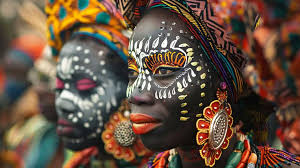

Because of the great diversity of people and cultures, Nigeria has distinguished herself
over the centuries in the field of arts. Nigerian versatility in art is so great that it is
generally felt that all African nations should view Nigeria as the principal trustee of the
most durable fruits of black artistic genius. It is not precisely known when the first works
of Nigerian art reached the outside world, but in 1897, following a British punitive
expedition to Benin, over 2,000 Benin bronzes and ivories were shipped to England and
later dispersed all over Europe and America.
The oldest sculptures found in Nigeria were from the Southern Zaria and Benue areas of
central Nigeria. They consist of terracotta figures and figurines made by people who
achieved a high degree of cultural sophistication. These sculptures, together with other
cultural elements, have been named the Nok Culture. Evidence shows the Nok people
had knowledge of iron smelting and adorned themselves with tin and stone beads,
earrings, noserings, and bracelets. The Nok Culture is dated between 500 B.C. and 200
A.D. The next known phase of Nigerian cultural evolution was Igbo Ukwu bronze casting.
Found in the small village of Igbo-Ukwu, near Awka, the casts date from the 9th Century
A.D. They first came to light in 1938 and consist of staff heads, crowns, breastplates,
pendants, ornaments, anklets, wristlets, and chains. At about the same time the
Igbo-Ukwu people were casting bronze, the ancient Ife people were also producing
works in bronze, copper, and terracotta. In the first quarter of this Century, Ife works
caused a great stir among world art critics and historians who were unaccustomed to
such naturalism in African art. The best-known Nigerian artworks are the Benin
Antiquities. Legend recounts how the Benin people learned the art of bronze casting
from Ile-Ife around 1400 A.D. Oba Ogunta, the sixth King of Benin, is credited with having
encouraged this art in Benin.
Nigeria's cultural heritage is woven from
threads of history and diversity, legend and conquest. Tourists visiting the country will
gain insights into a glorious past as well as a promising future, set amid the natural
beauty of this diverse country. From rain forests in the south, and broad savanna
woodlands in the center to a semi-desert region in the north, Nigeria offers a remarkable
range of physical beauty in her land and the hospitality of her people, ready to be enjoyed
by the tourists fortunate enough to choose this land of ancient empires as their travel
destination.
Nigeria is a vast country with a population of about 120 people covering about 923,768
sq. km of landmass, located wholly within the tropics. The country aptly described as the
'Giant of Africa' is richly endowed with ecological and cultural resources, which are of
universal recognition. The richness and diversity of the Nigerian culture is a
manifestation of the socio-cultural differences of the over 250 ethnic groups that inhabit
the land for ages.
Tourism is one of the growing sectors of the Nigerian economy. The industry was
accorded priority status in 1990 when the National Tourism Policy was launched. The
main thrust of Government policy on tourism was to generate foreign exchange
earnings, create employment opportunities, promote rural enterprises and national
integration among other things.
In recognition of the immense contributions of tourism to the national economy, the
country's Vision 2010 set the year 2005 as the nation's year of tourism. The obvious
implication of this development is that tourism policies and programs will now be aimed
at making Nigeria the "Ultimate Tourism Destination in Africa" by the year 2005.
About Nigeria Climate
Temperatures across the country are relatively high with a very narrow variation in
seasonal and diurnal ranges (22-36t). There are two basic seasons; the wet season
which lasts from April to October; and the dry season which lasts from November till
March.
The dry season commences with Harmattan, a dry chilly spell that lasts till February and
is associated with lower temperatures, a dusty and hazy atmosphere brought about by
the North-Easterly winds blowing from the Arabian peninsular across the Sahara; the
second half of the dry season, February - March, is the hottest period of the year when
temperatures range from 33 to 38 degrees centigrade.
The extremes of the wet season are felt on the southeastern coast where annual rainfall
might reach a high of 330cm; while the extremes of the dry season, in aridity and high
temperatures, are felt in the Northern third of the country.
Nigeria Resources
AGRICULTURAL, MINERAL, AND MARINE
Nigeria, in addition to its huge population, is endowed with significant agricultural,
mineral, marine, and forest resources. Its multiple vegetation zones, plentiful rain,
surface water, underground water resources, and moderate climatic extremes allow for
the production of diverse food and cash crops. Over 60 percent of the population is
involved in the production of food crops such as cassava, maize, rice, yams, various
beans and legumes, soya, sorghum, ginger, onions, tomatoes, melons, and vegetables.
The main cash crops are cocoa, cotton, groundnuts, oil palm, and rubber. Extractions
from these for export and local industrial use include cocoa flour and butter, rubber
crumbs, vegetable oil, cotton fiber, and yarn. The rainforests have been well exploited for
timber and wood products of exotic and popular species.
Oil and Gas, by value, are the most important minerals. They are exploited and produced
in the Niger Delta basin and off-shore on the continental shelf and in the deep-sea of the
territorial waters. Nevertheless, there are significant non-oil mineral deposits on land
many of which have been identified and evaluated: coal, iron ore, gypsum, kaolin,
phosphates, limestone, marble, columbine, baryte, and gold.
Nigeria Government
The Federal Republic of Nigeria consists of thirty-six states, and the administrative
headquarters and the capital city is Abuja located in the Federal Capital Territory, which
is geographically situated in the middle of the country.
Effective participation in governance by all adults is assured through the sharing of
powers, revenue, and responsibilities between the three tiers of government, i.e. the
Federal Government, the State Governments, and the various Local and Municipal
Councils of the federation
Nigeria Resources
Nigeria
Geography
Nigeria is in the West African region
and lies between longitudes 3 degrees and 14 degrees and latitudes 4
degrees and 140 degrees. It has a landmass of 923,768 sq. km. It is
bordered to the north by the Republics of Niger and Tchad. It shares
borders to the west with the Republic of Benin, while the Republic of
Cameroun shares the eastern borders right down to the Atlantic Ocean's
shores, forming the southern limits of Nigerian Territory. The about
800km of coastline confers on the country the potential for maritime
power. Nigeria's land is abundant for agricultural, industrial, and
commercial act
Nigeria Vegetation
In line with the rainfall distribution, a wetter south and a drier northern half, there are two
broad vegetation types: Forests and Savanna. There are three variants of each, running
as near parallel bands east to west across the country. Forests Savanna Saline water
swamp Guinea Savanna Fresh water swamp Sudan Savanna Tropical (high) evergreen
Sahel Savanna.
Rainforest
There is also the mountain vegetation of the isolated high plateau regions on the far
eastern extremes of the country (Jos, Mambilla, Obudu).
The savanna, especially Guinea and Sudan, are the major grains, grasses, tubers,
vegetable, and cotton growing regions.
The Tropical evergreen rain forest belt bears timber production and forest development,
production of cassava; and plantation growing of fruit trees - citrus, oil palm, cocoa, and
rubber, among others.